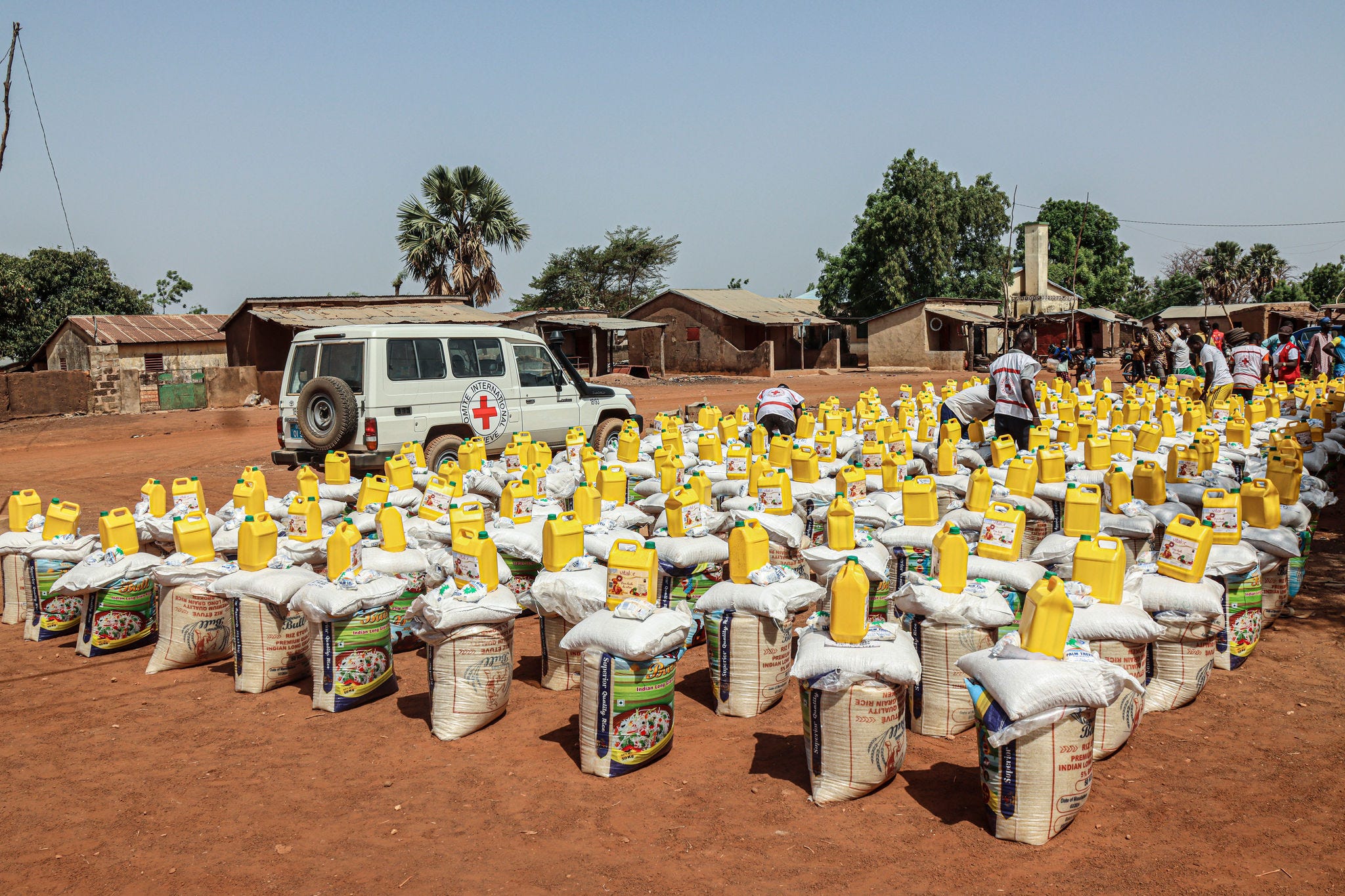
MOs have responded to reform pressures by adopting delivery modalities that give affected people greater choice and by investing in approaches intended to act before crises escalate. MOPAN evidence shows that cash assistance, a central commitment of both the Grand Bargain and a key theme under the Deliver pillar of the Humanitarian Reset, improves organisational cost-efficiency thanks to reduced transaction and delivery costs (MOPAN, 2025, p. 30[25]).
Some MOs have strengthened preparedness capacities through early-warning systems, contingency planning, pre-positioned supplies, and dedicated financing mechanisms, with some organisations promoting and supporting preparedness across the system, through information sharing and partner capacity building. MOs have also integrated anticipatory action in their frameworks, systems, and programming. However, the implementation of these delivery modalities has often lagged behind organisational ambition, as a result of competing internal priorities, organisational bottlenecks, and insufficient funding. Aid flows remain weighted towards crisis response, with resources for disaster prevention and preparedness being limited to only 2% of total ODA between 2019 and 2023 (UNDRR, 2025[28]).
Some MOs assessed by MOPAN had increased their use of cash assistance, such as UNDP and WFP. MOPAN found that WFP’s shift from food assistance towards cash and vouchers offered substantial potential for value for money gains (MOPAN, WFP Technical Annex, 2024, p.90). During the COVID-19 pandemic, WFP also expanded remote-management systems and technology-enabled transfers to maintain delivery where physical access was restricted, although limited digital access risked excluding some vulnerable groups. However, in 2023 a significant proportion of staff time and resources were redirected from the Cash-Based Transfer Division to the Global Assurance Project (see section 3.4). Following the restructuring, in 2024 the Division was dissolved and responsibilities distributed among three different divisions, requiring a cross-departmental working group to ensure coordination and policy coherence (WFP Executive Board, 2024[29]).
FAO expanded its Cash+ approach, which combines cash or vouchers with productive inputs, technical assistance, or training (Maeda and Oca Rojo, 2017[30]). While the evaluations reviewed by MOPAN identified important benefits, procurement and implementation delays continued to affect the timeliness of transfers and accompanying inputs, compounded by the absence of systematic monitoring against seasonal calendars (MOPAN, FAO Technical Annex, 2024, p.165).
Some MOs have strengthened their readiness to respond to future crises through risk monitoring and the strengthening of early-warning systems, enhanced contingency planning and pre-positioned supplies. UNHCR’s strong emergency response functions were further strengthened with the 2023 Policy on Emergency Preparedness and Response, which established clear emergency levels, decision-making responsibilities and actions, supported by risk monitoring and pre-positioned stocks (MOPAN, UNHCR Assessment Report, 2024, p.58). At the time of the assessment, IOM was still at an early stage in developing an organisation-wide early-warning approach, but did undertake contingency planning in emergency and protracted crisis settings (MOPAN, IOM Technical Annex, 2023, p.66, 76). The organisation developed an Emergency Preparedness guidance in 2020 and is also equipped with an Emergency Preparedness Dashboard covering risks and readiness across 70 countries, supported by regional emergency focal points and context-specific early-warning systems (MOPAN, IOM Technical Annex, 2023, p.76).
Some MOs support and facilitate emergency preparedness across the system. In 2023, UNDP provided crisis-risk dashboards to 50 UN country teams, supporting analysis, early-warning systems, and risk-aware programming (MOPAN, UNDP Technical Annex, p.95). Similarly, WHO has supported national Health ministries in strengthening their health emergency preparedness capacities through dedicated guidance and capacity building (MOPAN, WHO Technical Annex, 2024, p. 62-63).
Some MOs have also identified anticipatory action as a corporate priority and integrated it into organizational frameworks and programming. UNCHR incorporated anticipatory action into COMPASS, its results-based planning and reporting framework (MOPAN, UNHCR Assessment Report 2024, p.35). WFP has increasingly used climate-risk insurance and other anticipatory instruments, such as cash combined with early-warning messaging, with evaluation evidence pointing to gains in timeliness and scale (WFP, 2025[31]) (MOPAN, WFP Technical Annex, 2024, p.135).
OCHA upgraded anticipatory action as a corporate priority and introduced strategic steers for CERF. Indeed, CERF has evolved since 2019 from a primarily rapid-response funding mechanism, its core function that it continues to maintain, into being the leading contributor to anticipatory action globally, increasingly using forecasts, pre-agreed triggers, and pre-arranged financing to enable earlier, more proactive humanitarian responses (OCHA, 2025[32]). However, these changes were not embedded through a formal strategy review, contributing to uncertainty and limited buy-in, while its support to national preparedness frameworks remained largely demand-driven rather than systematic (MOPAN, OCHA Assessment Report, 2021, p.72, 111). In IOM’s case, MOPAN found that the absence of a dedicated funding instrument or sufficient reserves limited its capacity to translate warnings into timely anticipatory responses (MOPAN, IOM Assessment Report, 2023, p.44).
Introducing or strengthening delivery modalities such as cash assistance, preparedness and anticipatory action was closer to adaptation by design where these approaches were embedded in corporate systems, supported by dedicated expertise and financing, and monitored for timeliness, inclusion, and results. Redirected staff capacity or absent financing left implementation partial and limited the intended effectiveness gains.