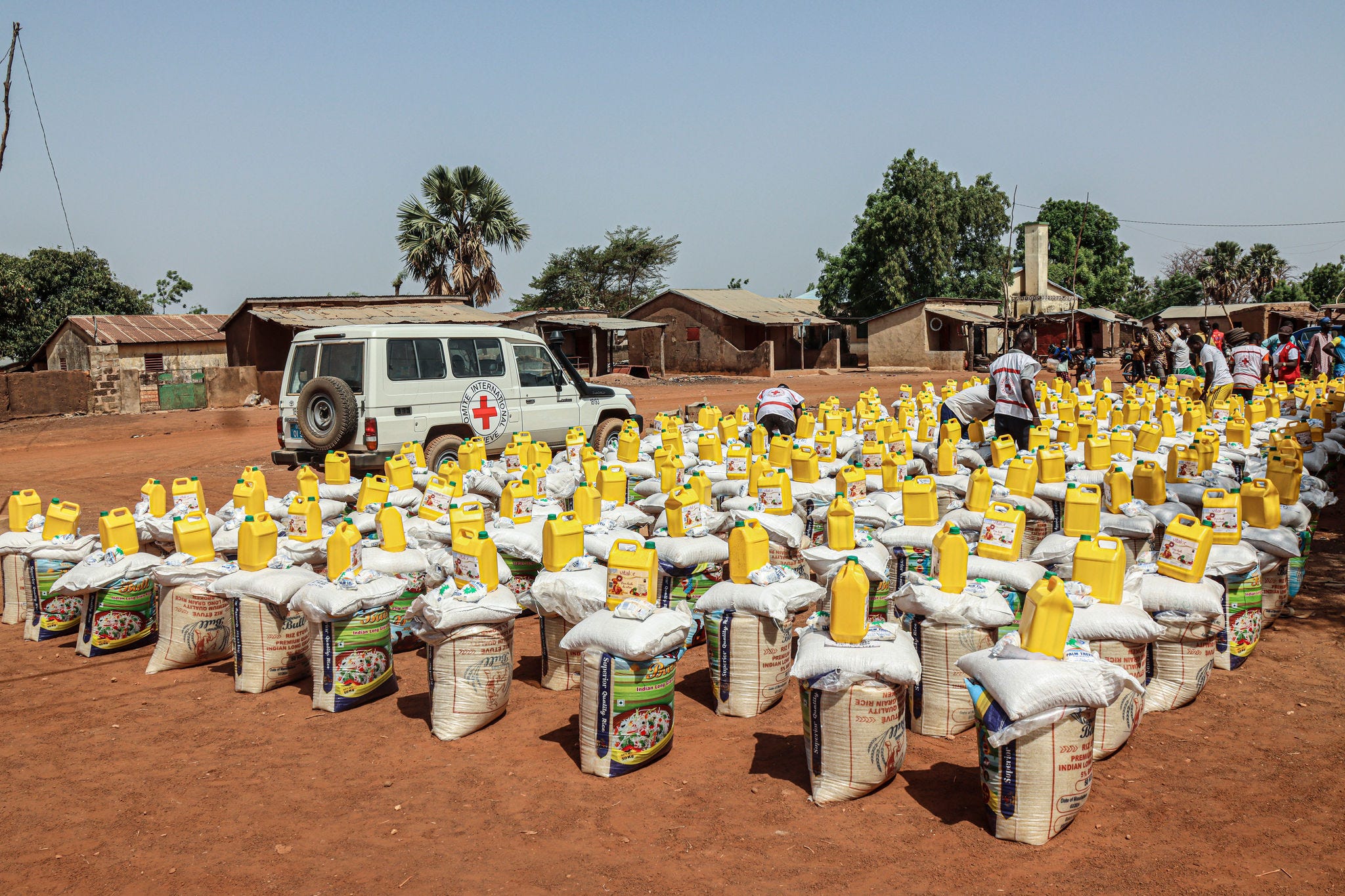
In 2026, multilateral organisations (MOs) responding to crises face rapidly rising humanitarian needs, driven by conflict, climate-related shocks, displacement, health emergencies and repeated violations of international humanitarian law, with 239 million people estimated to require humanitarian assistance and 88.7 million people facing the most severe and life-threatening needs (OCHA, 2025[2]). At the same time, the availability and predictability of international finance to respond to crises have deteriorated sharply: preliminary OECD data indicate that official development assistance (ODA) from DAC donors fell by 23.1% in real terms in 2025, while humanitarian funding reached its lowest level since 2016 (OECD, 2026[3]). This widening gap between needs and resources has forced MOs to adopt hyper-prioritisation by concentrating assistance on the most urgent, life-threatening needs. These unprecedented funding cuts have become a key driver of system-wide reform, triggering the Humanitarian Reset and the New Humanitarian Compact, which seek to make the system faster, lighter, more locally led, and more efficient.
The funding and reform pressures experienced since 2025 are exceptional in their breadth and magnitude. However, previous humanitarian reform agendas existed and at least some humanitarian MOs have been exposed to episodes of resource scarcity in the past. Since the mid-2010s, humanitarian financing has increased substantially but it has not kept pace with the faster growth in humanitarian needs and associated funding requirements, resulting in a widening humanitarian funding gap – particularly as large contributions to the humanitarian response to the Covid-19 pandemic and the Ukraine crisis were not sustained (Rieger et al., 2024[4]). Indeed, in previous years, MOs working in crises have repeatedly been asked to respond to changing patterns of need, new policy commitments, shifts in donor financing, and calls for greater efficiency, accountability, and proximity to crisis-affected people (see, for example, the 2012 Transformative Agenda, the 2015 Grand Bargain and 2016 New Way of Working).
MOPAN assessments show that these pressures have led MOs to revise strategic priorities, restructure operations, change staffing and delivering models, develop new partnerships, and strengthen their performance management and accountability mechanisms. Some adaptations have enabled MOs to become more agile, responsive, and cost-effective. Others have weakened institutional capacity or transferred risks and pressures to country offices or implementing partners. Importantly, reductions in expenditure are not in themselves evidence of greater efficiency or effectiveness. Some measures may generate immediate savings, but their implications for organisational efficiency and effectiveness depend on whether they enable an MO to focus resources and preserve essential capabilities, or instead erode the capacities needed to deliver its mandate. This pattern is particularly relevant today, as the combination of rapid reforms and financial constraints could have lasting effects – positive or negative - on organisational effectiveness in responding to crises.
This review examines cases through the lens of adaptation by design and adaptation by attrition (Box 2). The distinction is not strictly binary: the same measure can move towards attrition when its implementation is rushed, weakly steered, or under-resourced.