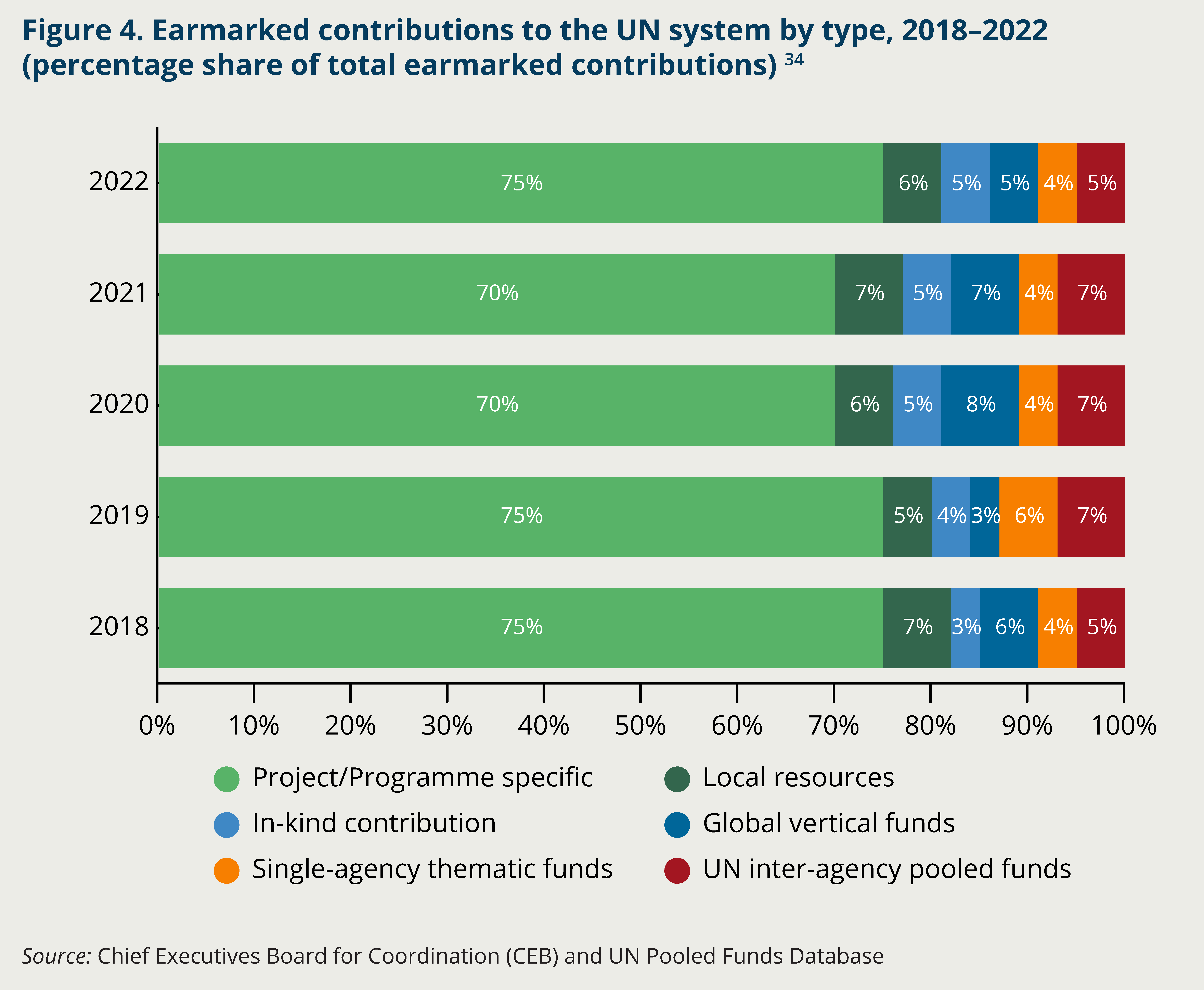
UN entities face a persistent funding gap in delivering normative support and policy advice. By 2023, earmarked contributions accounted for more than 80% of UNDS funding, while core resources made up only 13%. Most of these earmarked funds (70–75%) were tied to specific programmes or projects between 2018 and 2022. Assessed resources are usually allocated to normative support, but they represent only 7% of UNDS funding.28 Moreover, much of the limited core funding is absorbed by oversight and enabling functions, leaving little space to build in-house policy expertise at country level.
This imbalance has concrete effects. UN-Habitat’s 2024 MOPAN assessment found that low levels of core funding pushed the organisation to expand capacity development and service delivery. Similarly, MOPAN’s 2019 assessment of OHCHR found that its support for compliance with human rights norms at the country level was increasingly perceived as politically sensitive. This undermines predictable Regular Budget funding and complicates engagement with the General Assembly. These trends align with findings that some Member States have marginalised human rights in the UN not only through discursive contestation, but also through behavioural contestation such as compromises on final texts and budgets.29
A 2023 study found that current funding mechanisms create incentives for UNDS entities to compete for funding and prioritise programme and project fundraising and delivery over expertise building. This competition over resources is exacerbated by internal incentive structures within UN entities. A recent evaluation found that the performance of Heads of UN entities at the country level is often evaluated in part as a function of the resources they can mobilise for their individual UN entity. As one interviewee put it: “People get promoted for fighting hard to get money for their entity, not for being collaborative.”30
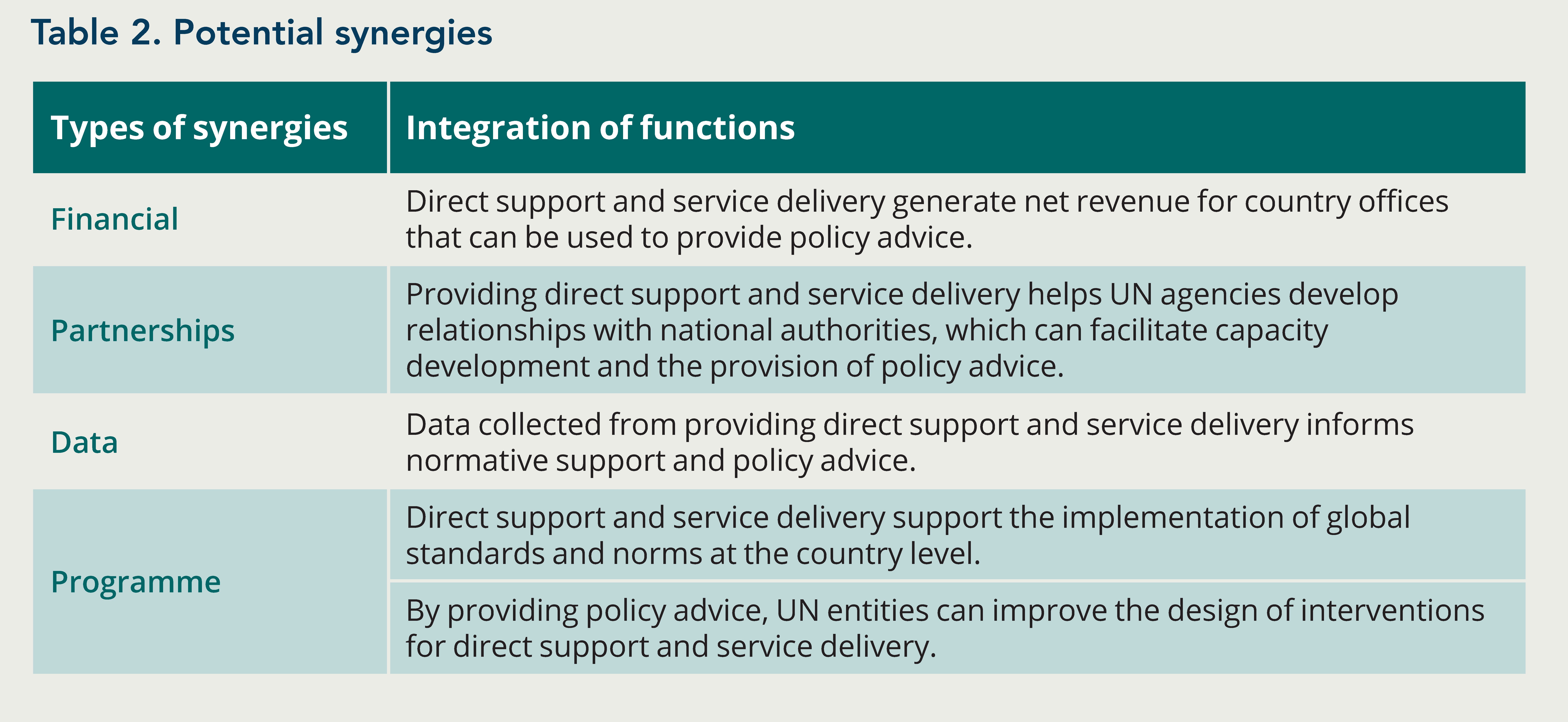
These pressures shape external partnerships as well. Rather than prioritising relationships with universities, think tanks, or chambers of commerce to strengthen policy advice, UN country offices often focus on partnerships that generate funding or in-kind support.31 Taken together, these dynamics show how financial incentives push entities towards single-agency interventions focused on direct support and service delivery.