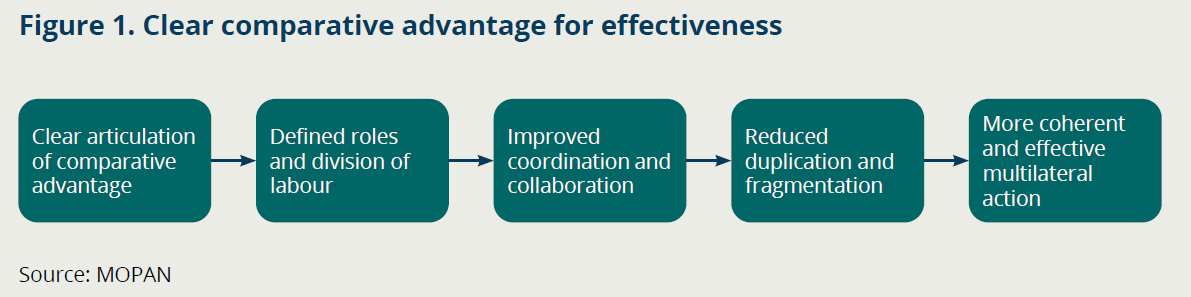
The recommendations presented below are situated within the framework of the UN80 initiative and are directed towards strengthening UN entities and inter-agency reform processes.
Some of these recommendations are not new and have been raised in several system-wide evaluations. However, given the persistent weaknesses in management response, follow-up and reporting on system-wide evaluations, it is worth recalling them here.
Although the brief has drawn on experiences from MDBs and vertical funds to enrich the analysis and situate the analysis in the broader multilateral system, these institutions operate under distinct governance arrangements and reform agendas. Consequently, the recommendations are not intended to prescribe actions for them, but rather to inform reforms within the UN development system.
For the UN80 Steering Committee
Relevant UN80 work packages: #2: New Humanitarian Compact: #3: UNDP / UNOPS: #4: UNFPA; #5: UNCT reconfiguration; #6: Regional reset; #9: Human rights group; #17: Training and research; #25: UNAIDS: #27: Environment.
· Map comparative advantage across the UN system using a common approach such as the one proposed in this brief, identifying where strengths could be consolidated, and what functions might not be pursued in the future. Such mapping could be applied at the global and country levels, the latter allowing for differentiated configurations adapted to context.
· Should mergers and other reconfigurations take place, ensure that these decisions preserve critical capacities (e.g. specialised logistics, convening power, normative leadership), avoiding bloated entities with diluted comparative advantage.
· Design transition strategies for sunsetting entities that maintain continuity of essential functions and safeguard stakeholder communities.
For UN entities
· Embed a common approach to comparative advantage:
o Adopt and apply a common, relational approach to defining comparative advantage, such as the one proposed in this brief. This includes identifying both areas of strength and areas to be explicitly deprioritised.
o Embed this analysis in strategic plans, programmes of work and budget, operational frameworks, and performance systems – making collaborative delivery a corporate priority.
o Integrate comparative advantage into partnership frameworks and proposals, stating where the entity leads, contributes, or steps back.
· Align resources behind collaboration based on comparative advantage:
o Define a clear division of labour at the country level within the UN and with other stakeholders and determine and review resource decisions based on a clear analysis of comparative advantages and evolving country needs, for example, through UNSDCFs and Humanitarian Response Plans.
o Establish internal checks to ensure project grant uptake aligns with a clear and consistent analysis of the organisation’s comparative advantage.
o Actively use and advocate for pooled funding instruments and multi-entity programmes that align with agreed roles and reduce duplicate pipelines.
o Participate actively in joint programming mechanisms aligned with agreed roles and collaborative objectives, aligned with a clear and consistent analysis of comparative advantage.
o Use common and interoperable systems (e.g. system-wide evaluations, joint evaluations, mutual recognition) to reduce fragmentation and duplication of core functions.
· Strengthen accountability:
o Link staff incentives to collaboration based on the organisation's comparative advantages, integrating inter-agency collaborative behaviours into the performance appraisal system.
o Develop and apply shared metrics of collaboration for collective results, based on previously identified areas of comparative advantage, incorporating them into individual MEAL systems.
o Participate in mutual accountability mechanisms (e.g. common indicator frameworks, joint and system-wide reviews and evaluations) with clear roles and responsibilities tied to collective goals.
o Strengthen system-wide evaluations and management responses, including follow-up and reporting of progress.
For MOPAN members and other Member States
· Systematic articulation of comparative advantage:
o Require multilateral partners to clearly articulate and demonstrate their comparative advantage from a system-wide perspective in funding agreements, strategic planning, programmes of work and budgets, and other organisational actions, referencing agreed institutional or country-level configuration and role allocation.
o Promote analysis of comparative advantage that considers differences depending on country contexts, therefore resulting in divergent organisational configurations at the country level of those specificities.
· Promote co-ordination based on comparative advantage:
o Provide political backing and resources to co-ordination mechanisms (e.g. RCs, UNCTs, Clusters) to enforce coherent team configurations based on a common analysis of comparative advantages.
o Promote and support country platforms bringing the UN system together with national actors, MDBs and vertical funds, to ensure coherent co-ordination and delivery based on respective comparative advantages.
· Align funding with comparative advantage:
o Require that project and programme funding align with country-level system-wide strategic frameworks and reflect comparative advantages.
o Increase the share of pooled funds at the country level and make pooled contributions more attractive than single-donor project earmarks, for example by offering simplified reporting and visibility arrangements. This would counteract the trend of agencies chasing earmarks by expanding their roles to secure visibility.
· Strengthen accountability:
o Measure collective results, requiring entities to report against both organisational and system-wide outcomes. For example, donors could request that UN agencies present their contributions to shared UNSDCF or HRP targets and increase their scrutiny of inter-agency collaboration in governing bodies and donor groups.
o Commission and finance joint and system-wide evaluations, and strengthen follow-up and reporting mechanisms, signalling that collective impact and performance based on clearly defined and analysed comparative advantage from a relational perspective – rather than individual agency output – is the metric of success.
o Support harmonisation of management tools (e.g. unified reporting standards and data platforms) to reduce fragmentation and enable collaborative operations.